Risk is not just a number; it’s an emotion. How do you handle market red days?
Mastering the psychological side of investing during market turbulence.
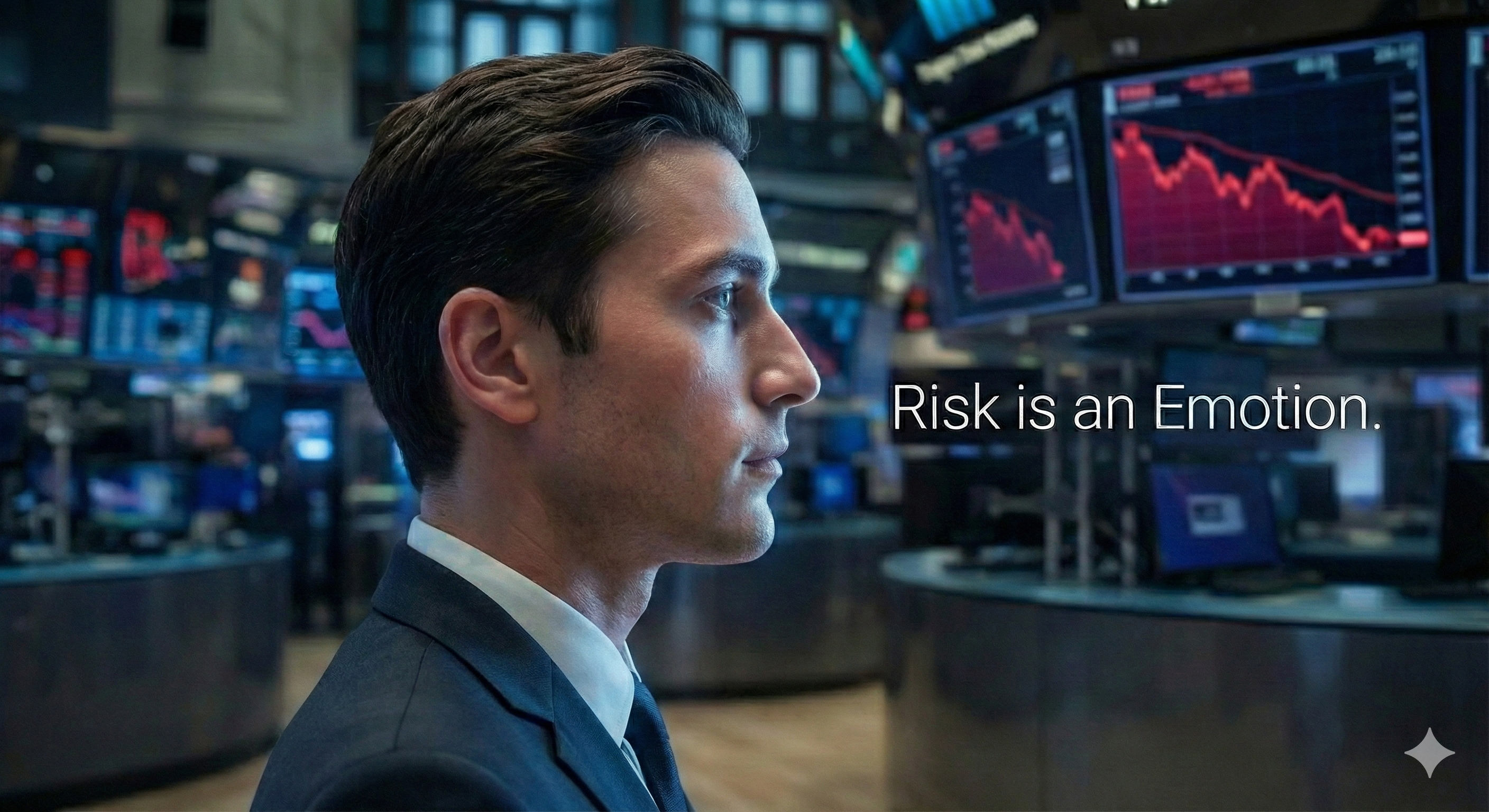
Visualizing the intersection of market data and human emotion.
Risk is not just a number; it’s an emotion. A sudden -5% drop in the market can feel like a physical blow, triggering the amygdala response, which is responsible for processing emotions such as fear and anxiety. This response, often called the fight or flight reaction, can push even the most seasoned investor to make impulsive moves that may not align with their long‑term strategy. When the ticker slides, the brain’s fear circuitry lights up, and the rational part of the mind can get drowned in a sea of panic. Understanding that market volatility is not merely a statistical fluctuation but a trigger for deep emotional responses is the first step toward mastering the psychological side of investing. By recognizing the physiological signals that accompany a market dip, you can start to train yourself to pause, assess, and respond with clarity rather than reaction. 📉🧠
Mathematical vs. Emotional Risk
Mathematical risk is often measured using standard deviation, a tool that calculates the volatility of an investment based on its historical returns. While this metric is valuable, it misses a critical component: emotional risk. The sleep test is a simple yet powerful way to gauge emotional exposure. It asks whether you can sleep at night knowing that your portfolio might decline in value. If the answer is no, you may be carrying an emotional burden that could cloud judgment during a downturn. Studies show that investors who feel uneasy about market dips are more likely to sell at the bottom, locking in losses. The sleep test forces you to confront the psychological cost of market swings, encouraging you to align your investment decisions with both your financial goals and your capacity for stress. By combining standard deviation with emotional self‑assessment, you create a more holistic view of risk that balances numbers with feelings. 🛏️📊
Strategies to Keep Calm on Red Days
Here are four strategies to keep calm on red days:
- Zoom out: Step back and view the broader economic landscape. Remember that market fluctuations are part of a long‑term journey, not a verdict on your wealth.
- Dollar‑cost averaging: Commit to investing a fixed amount at regular intervals regardless of market highs or lows. This disciplined approach spreads risk over time and reduces the impact of short‑term volatility.
- Turn off notifications: Constant alerts from trading apps can amplify anxiety. Instead, schedule a weekly or monthly review of your portfolio and make adjustments only when you have time to analyze data calmly.
- Rebalance your holdings: Regularly adjust your asset mix to keep it aligned with your risk tolerance and goals. Rebalancing ensures that you do not inadvertently become overexposed to a single sector during a market decline.
By applying these tactics, you create a buffer that protects both your portfolio and your emotional well‑being. 🧘♂️🛡️
Conclusion
The market will continue to rise and fall, but your response can be engineered. When a red day arrives, ask yourself: am I reacting or reflecting? Do I have a plan that accounts for both numbers and nerves? By integrating a clear strategy with emotional awareness, you can turn market turbulence into an opportunity for growth rather than a source of distress.