Phishing attacks are getting smarter with AI voice cloning. Are we ready?
When the voice on the other end of the line belongs to a trusted loved one—but isn't real—how do you verify the truth?
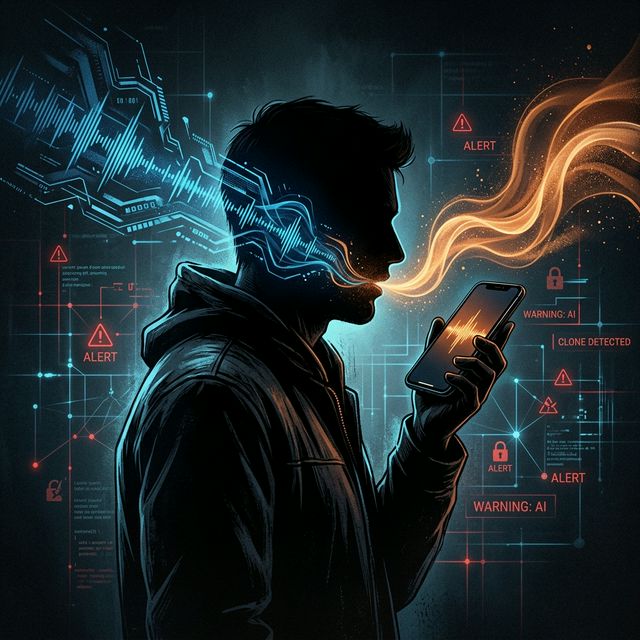
The convergence of deepfake audio and social engineering represents a profound escalation in digital fraud. Seeing is believing, but hearing is no longer proof.
Imagine receiving an urgent call from your mother, asking you to transfer money for a “family emergency,” and you comply — only to discover the call was a slick AI-generated scam. 🚨
The rise of AI voice cloning has turned ordinary phishing into a high-stakes game of deception. Scammers can now mimic the cadence, inflection, and even the emotional tone of loved ones, convincing victims that the request is genuine. When combined with Business Email Compromise (BEC) tactics, the result is a potent threat that can siphon funds from unsuspecting accounts in seconds.
The Scale of the Threat
Recent studies reveal that 64% of businesses faced BEC attacks in 2024, with each incident averaging a $150,000 loss. These numbers are not just statistics; they represent real employees, real customers, and real financial damage. The convergence of AI-enhanced voice cloning and sophisticated email fraud means that traditional security measures are no longer enough.
What makes AI voice phishing so dangerous is the personal touch it adds. A cloned voice can bypass many security protocols that rely on identity verification, because the caller “sounds” like someone the recipient trusts. Even two-factor authentication can be circumvented if the scammer convinces a user to share credentials verbally.
Corporate Defence Strategies
For businesses, the implications are twofold. First, the financial cost of a single breach can cripple operations. Second, reputational damage can erode customer trust, leading to longer-term revenue loss. Robust security protocols must therefore include voice-recognition checks, employee training on suspicious call patterns, and a clear incident-response plan.
- Employee awareness training is the frontline defense. Regular simulations that mimic AI-generated calls can help staff recognize subtle cues — such as unnatural pauses or inconsistent speech patterns — that hint at a fake voice. Encouraging a culture of verification — always confirming requests via a separate channel — can dramatically reduce the risk of falling prey to such scams.
- Technical safeguards are equally critical. Deploying advanced voice-authentication tools that analyze acoustic fingerprints can flag suspicious calls before they reach the user. Integrating AI-driven anomaly detection into email systems can also surface BEC attempts, especially those that combine forged email headers with voice-based requests.
Consumer Vigilance
On the consumer side, vigilance is key. Before transferring money or sharing sensitive data over the phone, verify the caller’s identity through an independent number. Use official contact channels whenever possible, and be wary of urgent language that pressures quick action. Even a short pause to confirm can save thousands of dollars.
The future of phishing will likely see even more sophisticated AI tools, making it essential for both individuals and organizations to stay ahead of the curve. Continuous education, coupled with cutting-edge technology, will form the bulwark against these evolving threats. The stakes are high, but with the right measures in place, the damage can be mitigated.
Are you prepared to recognize an AI-cloned voice, and do you have a plan in place to verify urgent financial requests? Let’s start a conversation about the steps you’re taking to protect yourself and your business.